A robust HACCP plan can pass document inspections. However, that plan is a promise. The proof that the promise is kept lies in the traces left behind each shift: monitoring records, checked thermometers, and deviations that are addressed thoroughly.
Codex refers to this work as verification, the sixth principle of HACCP. It is an ongoing process, not just an annual event before an audit.
The plan is a promise, the daily records are the proof
The reference standard is Codex CXC 1-1969. Its 2020 revision was adopted identically as SNI CXC 1-1969:2021. Codex states that HACCP provides verifiable control because it generates records that are reviewed before products are released.
Examples of verification activities according to Codex include:
- reviewing monitoring records to ensure CCPs remain under control;
- reviewing corrective action records, including the fate of affected products and their root causes;
- calibrating or checking the accuracy of measuring instruments;
- directly observing whether controls are implemented as planned;
- sampling and testing products and the environment.
The difference between verification and validation has been discussed in the article three control shelves. This article focuses on what happens every day.
The first trace: records written at the moment
Codex requires that every CCP monitoring record be signed by the monitoring personnel, complete with results and measurement times. The HACCP regulations for meat and poultry in the United States (9 CFR 417.5) are stricter: each entry must be made at the time of occurrence, dated, timed, and signed.
Records filled out later are usually identifiable by their patterns. Try opening the temperature sheet from the last month and ask three questions. Are the numbers round and uniform from morning to night? Does the writing for one full shift appear to be done in one sitting? Is there not a single number in a month that approaches the critical limit?
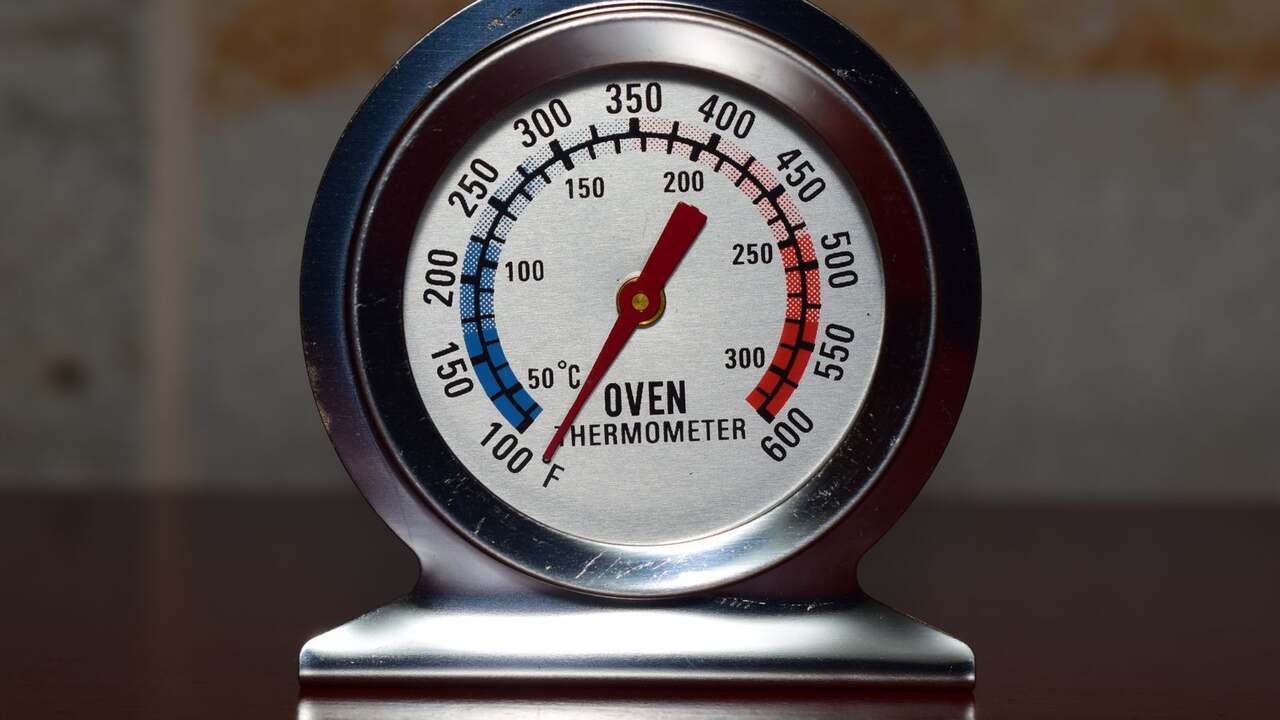
The second trace: thermometers that are checked, not just used
Critical limits in degrees mean nothing if the measuring instrument is inaccurate. The Food Safety and Inspection Service (FSIS) of the U.S. Department of Agriculture notes that most food thermometers are accurate within a range of 2 to 4 degrees Fahrenheit, approximately 1 to 2 degrees Celsius.
Here’s a cheap way to check:
- Fill a large glass with ice, add drinking water, and stir well.
- Submerge the thermometer stem at least 5 cm, without touching the sides or bottom of the glass.
- Wait at least 30 seconds, read without lifting it.
- The result should be 0 degrees Celsius. If it’s off, adjust according to the manufacturer's instructions.
The boiling water method can also be used, with a reference of 100 degrees Celsius at sea level. At higher altitudes, the boiling point is lower. Some thermometers, such as fork types, cannot be adjusted at all. If the results are off, the option is to replace the instrument.
The results of each check must be recorded: date, instrument number, reading, adjustment, and signature.
The third trace: deviations that leave marks
The HACCP guidelines from the U.S. National Advisory Committee on Microbiological Criteria for Foods (NACMCF), published by the FDA, establish three components of corrective actions: identify and fix the cause, decide the fate of affected products, and then document the actions taken. Codex adds root cause analysis and periodic reviews of all corrective actions to identify patterns.
Therefore, a record sheet without a single deviation in a month is indeed questionable. Processes in kitchens or factories are rarely that smooth.
Who checks, and when
Codex requires that verification be conducted by someone other than the personnel monitoring and taking corrective actions. The frequency is left to each plan, as long as it is sufficient to prove that the system is functioning.
U.S. regulations provide concrete examples. While these rules are not binding in Indonesia, they serve as useful references:
| Task | Example Frequency | Reference |
|---|---|---|
| Review batch records to ensure completeness, all critical limits are met | Before products are shipped | 9 CFR 417.5(c) |
| Verify CCP monitoring, including directly observing monitoring personnel | As per plan, for example once per shift | NACMCF, 9 CFR 417.4(a)(2) |
| Review all monitoring records and corrective actions | Monthly | NACMCF |
| Review the HACCP plan | At least annually, and whenever there are changes in materials, recipes, volumes, or personnel | 9 CFR 417.4 |
Codex also emphasizes that simple records are sufficient, such as product temperatures written on shipping invoices or existing checklists. The important thing is that they are filled out at the moment.
When there is a suspected poisoning, investigators will request temperature and process records from the kitchen, as discussed in the article 24-hour reporting obligation. At that time, neatly written records filled out later will not help anyone. What helps is the honest records written at the time of the incident.
Sources
- FAO and WHO, Codex Alimentarius: General Principles of Food Hygiene (CXC 1-1969), 2020 and 2022 revisions, sections 19.9 to 19.12, 2023 edition
- BSN: HACCP Refreshment based on SNI CXC 1-1969:2021 (CXC 1-1969 Rev. 2020, IDT)
- U.S. FDA: HACCP Principles and Application Guidelines (NACMCF), including examples of verification schedules
- eCFR: 9 CFR 417.4 Validation, Verification, Reassessment
- eCFR: 9 CFR 417.5 Records
- USDA FSIS: Food Thermometers, Calibration section