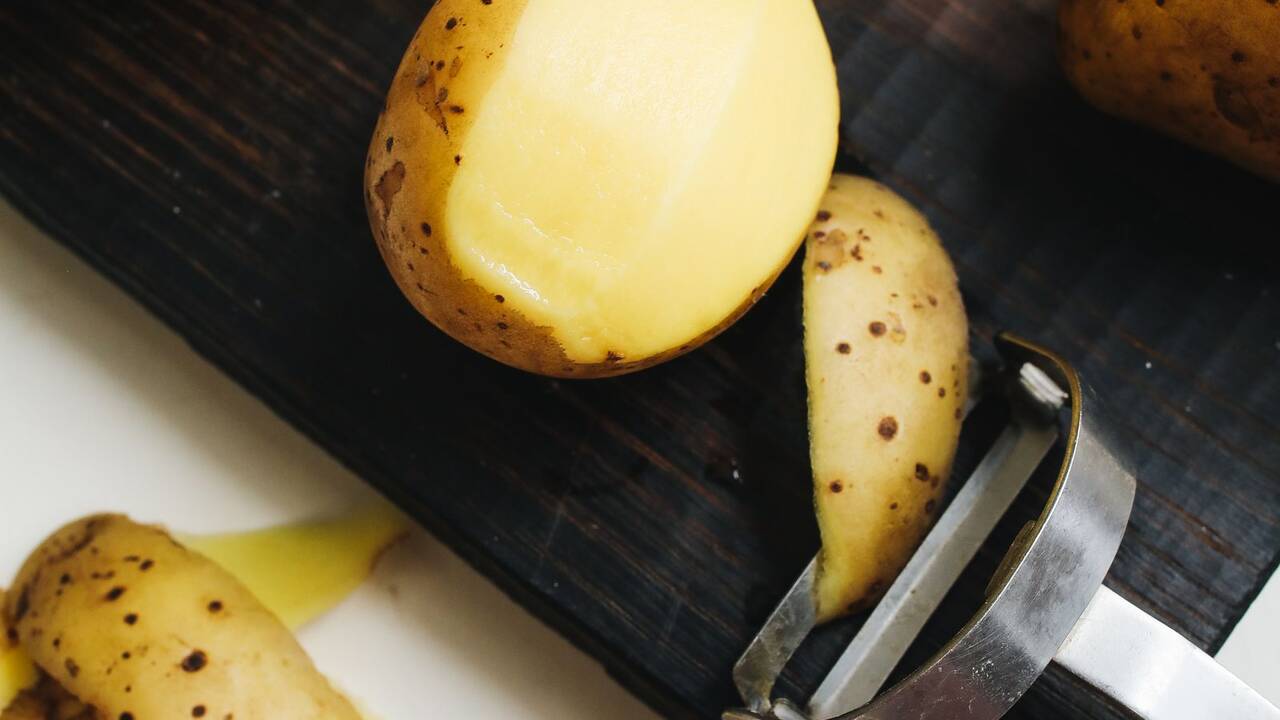
A basket of potatoes arrives from the supplier. Some tubers are green on one side, while others have already sprouted small shoots. The question at the receiving desk is usually the same: cut off the bad parts and use the rest, or reject them all? The answer depends on one thing that is often misunderstood, which is what exactly is toxic there.
The green color is not the toxin
The green on potatoes is chlorophyll, and chlorophyll itself is not harmful. What is dangerous is the compound that forms under the same conditions, which is glycoalkaloids. According to the Food and Drug Administration, glycoalkaloids in potatoes consist of two main toxins, solanine and chaconine, and their levels increase in tubers that are green, sprouted, or physically damaged. Health Canada notes that alpha-solanine and alpha-chaconine together represent about 95 percent of the total glycoalkaloid content in potatoes.
So, green is not the cause, but rather an indicator. Tubers that have been exposed to light for a long time produce both chlorophyll and glycoalkaloids. You see the former, and the latter is completely invisible.
Reference number used by many countries: 200 ppm
Health Canada sets the maximum limit for total glycoalkaloids in fresh potato tubers at 200 parts per million, equivalent to 20 milligrams per 100 grams. This figure has been incorporated into Canada's food contamination regulations and has been in effect since January 25, 2018. The Swedish Food Agency uses the same limit, and the United States Department of Agriculture uses it as a non-binding guideline.
As a point of reference, normal potato flesh is typically reported to be in the range of 1.25 to 5 milligrams per 100 grams, while the skin of toxic tubers can reach 150 to 220 milligrams per 100 grams. The 20 milligram limit applies to whole tubers, so these two figures are not directly comparable, but the difference explains why peeling the skin is always mentioned before other steps.
The BPOM information page itself does not list a limit for glycoalkaloids in fresh potatoes. What it provides are guidelines for selection and storage, and for daily kitchen use, those rules are actually more practical.
Cooking until done does not solve the problem
This part is often overlooked. Glycoalkaloids are heat-resistant. Health Canada states that baking, boiling, frying, and microwaving have not been shown to significantly reduce their levels. Dr. Andi Early Febrinda from the Vocational School of IPB University mentions a more specific figure, stating that boiling only reduces solanine levels by about one percent, and if the green parts are boiled along with the tuber, the compound can spread throughout.
Therefore, in commercial kitchens, cutting off the green parts and using the rest is not a responsible decision. There is no way to measure how far the compounds have spread.
Seven things to check tonight
- Reject tubers that are green, sprouted, soft, or physically damaged at the time of receiving, not when they are about to be cooked.
- Dark first, then cool. Continuous warehouse lighting has the same effect as sunlight.
- Peel the skin before processing. Most glycoalkaloids are found in the skin and the layer just beneath it.
- A bitter taste or burning sensation in the mouth is a sign to stop, not a sign that the seasoning is lacking.
- Do not reuse potato boiling water for broth or sauce, as the compounds dissolve into the water.
- Storage temperature should not just be cold. The Vegetable Research Institute recommends cooling at 7 and 10 degrees Celsius with a conditioning period of nine days, noting that cooling increases the sugar content of the tubers, changing the color of fried results.
- For children's meals, use peeled potatoes, as children are more sensitive to solanine.
Why cases are rarely detected
Symptoms of high exposure according to Health Canada start with a bitter or burning sensation in the mouth, followed by nausea, vomiting, abdominal cramps, and diarrhea. In more severe cases, neurological effects such as excessive drowsiness, restlessness, tremors, confusion, weakness, and vision disturbances may occur.
All these symptoms can easily be recorded as ordinary food poisoning. The cause is rarely traced back to the basket of potatoes in the warehouse, and because the damage leaves no trace in the kitchen, the only safeguard that truly works is the decision to reject or accept at the receiving desk.
This topic of raw material selection is discussed in the Hygiene Class: Restaurant and Cafe Sanitation with Mohamad Awaludin. If you prefer to see the explanation directly, there is a short clip.
Sources
- Food and Drug Administration, "Natural Toxins in Food Plants", pom.go.id
- IPB University, "Do Green and Sprouted Potatoes Contain Toxins? Here's the Explanation from IPB University Experts", June 18, 2025, ipb.ac.id
- Health Canada, "Proposal to transfer the maximum level for total glycoalkaloids (TGA) in potato tubers", NOP/ADP C-2017-5, canada.ca
- Health Canada, "Notice of Modification ... to Add the Maximum Level for Total Glycoalkaloids (TGA) in Potato Tubers", NOM/ADM C-2018-2, canada.ca
- Tabloid Sinar Tani, "This is the Fresh Storage Recommendation for Potatoes", interview with Prof (R) Ali Asgar, Vegetable Research Institute, tabloidsinartani.com
- Warung Sains Teknologi, "The Green Parts of Potatoes are Toxic", January 27, 2024, warstek.com