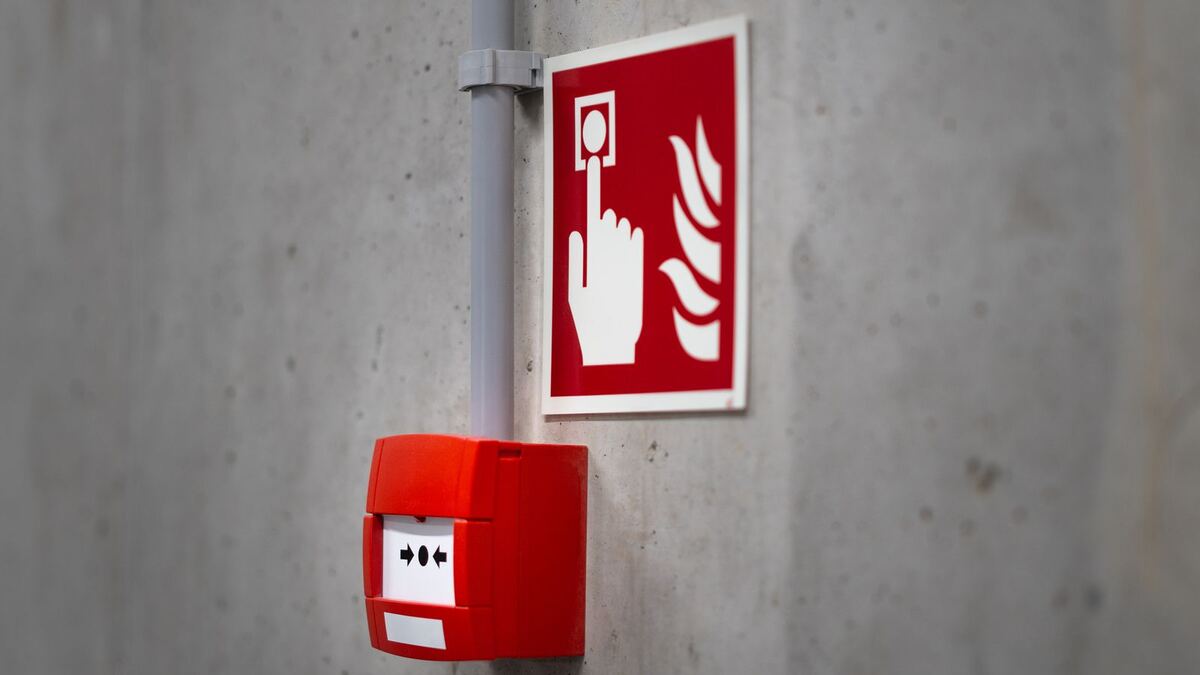
Many workplaces have fire extinguishers (APAR) in every corner, but do not have designated personnel to use them. When the first smoke appears, everyone looks to the security guard. In fact, the regulations already specify how many people must be prepared.
The regulation is the Minister of Manpower Decree Number KEP.186/MEN/1999 concerning Firefighting Units in the Workplace. In the JDIH Kemnaker, its status is still Valid and has no history of amendments. Its parent law is Law No. 1/1970 Article 3 paragraph (1) letters b and d: safety requirements include preventing, reducing, and extinguishing fires, as well as providing escape routes.
Five basic obligations of employers
Article 2 paragraph (2) details the obligations:
- controlling every form of energy;
- providing detection, alarm, extinguishing, and evacuation facilities;
- controlling the spread of smoke, heat, and gas;
- establishing a firefighting unit;
- conducting fire response training and drills periodically.
There is one additional obligation that is often overlooked. Workplaces with more than 50 workers, or those with moderate and heavy hazard potentials, are required to have a fire emergency response plan book. It must include at least sources of hazards, types and maintenance of protective facilities, work procedures, and emergency procedures.
Hazard class determines the size of the unit
Appendix I divides workplaces into five classes. Here are some examples from the list:
| Class | Examples of workplaces |
|---|---|
| Light | offices, schools, hotels, hospitals, restaurants |
| Medium 1 | parking lots, bakeries, electronics factories, laundries |
| Medium 2 | machine workshops, printing houses, textile factories, cold storage warehouses |
| Medium 3 | warehouses, auto repair shops, plastic factories, clothing factories |
| Heavy | paint factories, flammable chemical factories, oil refineries |
Staff ratio according to Article 6
The firefighting unit has four layers: fire role officers, firefighting teams, unit coordinators, and K3 specialists in firefighting.
| Role | When required | Minimum number |
|---|---|---|
| Fire role officer | all workplaces | 2 people per 25 workers |
| Unit coordinator | light and medium 1 | 1 person per 100 workers |
| Unit coordinator | medium 2, medium 3, heavy | 1 person per work unit |
| Team and K3 specialist | light and medium 1 with 300 workers or more; all medium 2, medium 3, heavy | determined, without a numerical ratio |
Calculation example. A bakery (medium 1) with 120 workers: 120 divided by 25 results in 4.8. This article does not specify how to round, so a safe choice is to round up: 5 groups, meaning 10 fire role officers. The coordinator is 2 people if 1.2 is rounded up. Teams and K3 specialists are not required because the number of workers is below 300.
Compare this with a machine workshop (medium 2) that also has 120 workers. The fire role officers remain 10. The difference is that the team and K3 specialists are required regardless of the number of workers, and the coordinator is calculated per work unit.
Requirements for each role
| Role | Minimum education | Mandatory courses | Other requirements |
|---|---|---|---|
| Fire role officer | Junior High School (SLTP) | Basic Level I | physically and mentally healthy |
| Team member | Senior High School (SLTA) | Basic I and II | ages 25 to 45 years |
| Coordinator | Senior High School (SLTA) | Basic I, II, K3 Primary Expert | 5 years of service in the company |
| K3 specialist | Diploma (D3) in engineering | Basic I, II, Primary, Intermediate | 5 years of service, ministerial appointment letter |
The courses are conducted by K3 Service Companies appointed by the minister. K3 specialists have the authority to stop and refuse work that could trigger fires or explosions.
"Periodically" has no number, and that is not a loophole
The Minister of Manpower Decree 186/1999 only states that training and drills should be conducted periodically, without specifying once a year or every six months. The frequency commonly used in the field is practice, not the wording of the article.
The SMK3 assessment closes that loophole from another side. Appendix I of Government Regulation 50/2012 requires emergency procedures to be tested periodically by competent personnel, and coordinated with relevant authorities for large hazardous installations. Criterion 6.7 in Appendix II checks seven aspects, including:
- 6.7.2: emergency facilities and procedures are tested and reviewed routinely;
- 6.7.3: workers are trained according to their risk levels;
- 6.7.4: emergency officers are appointed, specially trained, and their names are known to everyone;
- 6.7.6: alarms and emergency equipment are inspected, tested, and maintained periodically.
So what auditors require is evidence: training schedules, attendance lists, evaluation records, and a list of appointed officers. How auditors assess the level of implementation is discussed in the article SMK3 audit and its assessment criteria.
For short projects, training schedules are more reasonable to follow the duration of the work. If you prefer to hear the explanation directly, there is a clip about routine emergency response training.
Try to match the number of fire role officers on your list with the number of workers today. Factories that grow from 40 to 120 people often forget to add their officers.
Sources
- Minister of Manpower Decree Number KEP.186/MEN/1999 concerning Firefighting Units in the Workplace, JDIH Kemnaker (PDF text: jdih.kemnaker.go.id/asset/data_puu/1999kmnaker186.pdf)
- Government Regulation Number 50 of 2012 concerning the Implementation of the K3 Management System, JDIH Kemnaker
- Law Number 1 of 1970 concerning Occupational Safety, JDIH Kemnaker