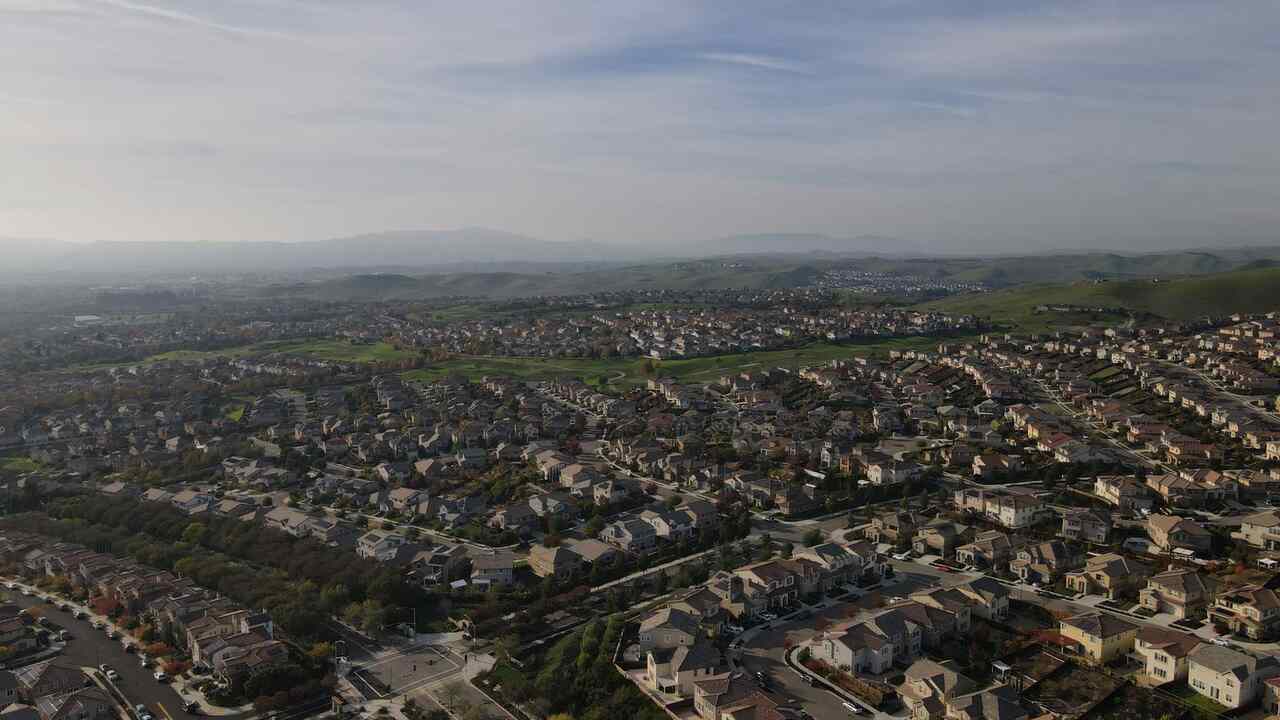
Housing developers often assume that one permit is sufficient for the entire complex. For PBG (Building Permit), that assumption is almost correct. However, for the subsequent letters, that assumption is incorrect, and the mistake only becomes apparent when the houses begin to be handed over.
What can be collective, and what cannot
Building Approval can indeed be submitted collectively. This is based on Government Regulation Number 16 of 2021, the implementing regulation of Law Number 28 of 2002, which has been amended by the Job Creation Law. This regulation is still in effect and replaces Government Regulation Number 36 of 2005.
The requirements are not lenient. The collection of buildings must be located in one area, owned by the same person or legal entity at the time the PBG is submitted, and use the same technical plan. If the technical plans differ, the collective application is invalid.
This is where developers often miscalculate. The Ministry of Public Works states that for housing or real estate, the application is a Collective PBG per house type. Therefore, a complex with five house types is not one document, but five. Clusters with different designs must be separated.
SLF and SBKBG remain per house
This part is often overlooked. The collectiveness stops at the PBG.
Article 277 of Government Regulation 16/2021 regulates this without any room for interpretation: for a collection of buildings in one area with the same technical plans, the Function Feasibility Certificate (SLF) and the Building Ownership Evidence Letter (SBKBG) are issued by the local government for each building.
This means that 200 houses require 200 SLFs and 200 SBKBGs, even though the PBG is just one document. The SBKBG is what the buyer will hold as proof of ownership of the building. Developers who budget time and administrative effort based on the number of PBG documents will be surprised at this stage.
The good news is that SLF and SBKBG are issued simultaneously through SIMBG, at most three working days after the statement of function feasibility is uploaded. Both are also issued free of charge.
Numbers you need to keep in mind
- PBG is issued no later than 28 working days, excluding the time for document corrections. There are four stages: submission, technical plan examination, retribution calculation, issuance.
- PBG is subject to retribution, the amount follows the local retribution regulation. SLF is not charged if the building already has an IMB or PBG.
- SLF for residential houses is valid for 20 years, while for other buildings it is 5 years. You can check its validity period through the SLF validity check tool.
- The technical plan documents for the collective PBG must be accompanied by a master plan of the area along with detailed drawings and descriptions of the location of each building within that master plan.
Two abbreviations that are often confused
In collective PBG consultations, the technical documents and master plan are reviewed by TPA. This abbreviation is often mistakenly read as Tim Penilai Ahli (Expert Assessment Team).
The correct term, according to Article 1 of Government Regulation 16/2021, TPA is Tim Profesi Ahli (Professional Expert Team), a team of professional experts appointed by the local government to provide technical considerations. The one called "assessor" is actually TPT, Tim Penilai Teknis (Technical Assessment Team), and its authority is much narrower: single-story residential houses.
Misnaming these two teams does not invalidate your application. However, mistakenly assuming who will review the documents can lead you to prepare documents and schedule consultations at the wrong door.
One thing that determines the order of work
Collective applications also require service providers. Here, the service provider is a business entity or person holding a competency certificate, SKA or SKK, in the field of building construction. Therefore, developers cannot draft their own technical plans and then upload them.
If you prefer to see the explanation directly, the topic of collective PBG is discussed in the PBG class clip.
Try recalculating your licensing plan based on the number of house types, not the number of complexes. From there, the number of PBG, SLF, and SBKBG documents will be clear from the start.
Sources
- Government Regulation Number 16 of 2021 on the Implementation of Law Number 28 of 2002 on Buildings, status Active, JDIH BPK
- Complete copy of Government Regulation Number 16 of 2021, JDIH Ministry of Coordinating Ministry for Infrastructure and Regional Development
- Consultation on the Building Law and SIMBG, Sahabat PU, Ministry of Public Works
- This is How to Manage PBG for Housing Areas, Kompas.com, featuring explanations from the Directorate General of Human Settlements