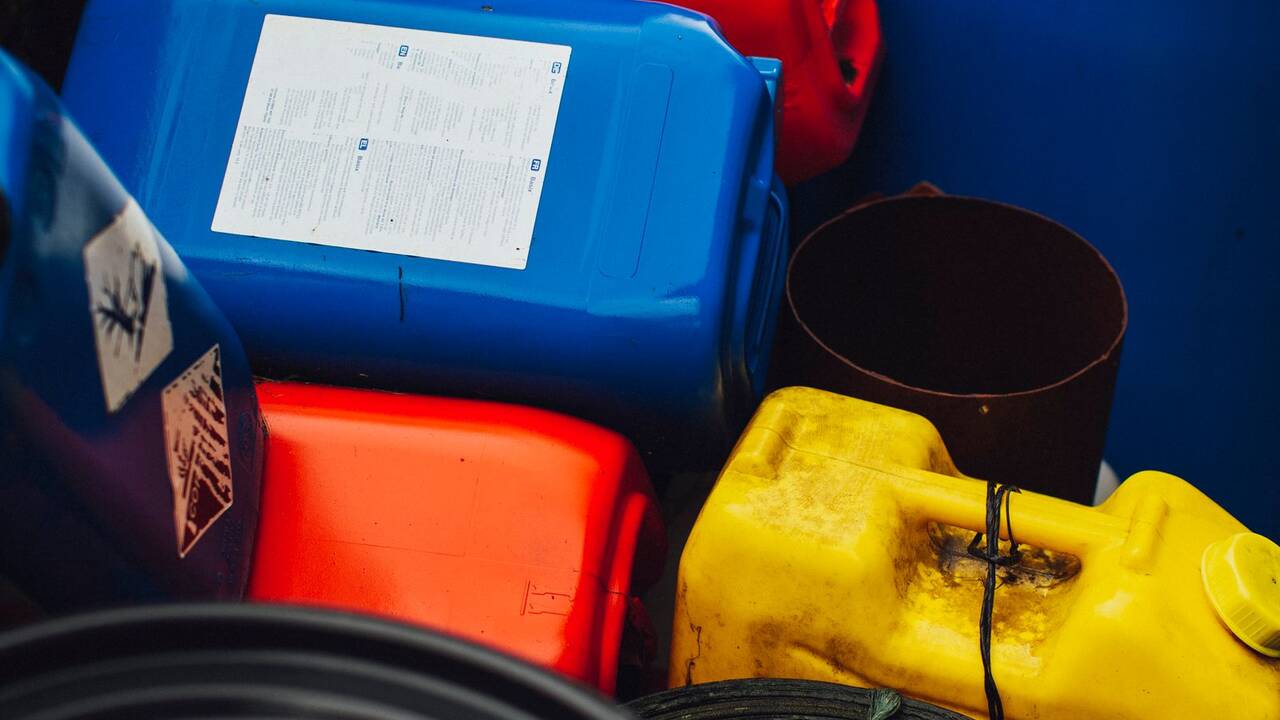
The most frequently asked question in front of temporary storage for B3 hazardous and toxic waste is not about the structure itself, but about time: how long can this waste stay here? The answer is not a single number. Since PP 22/2021 replaced PP 101/2014, the 90-day limit that previously applied uniformly to all producers is no longer in effect. Now there are four different limits, and what determines them is not how full your warehouse is.
Four time limits and what determines them
Three factors determine which limit applies: the amount of waste generated per day, its hazard category, and its source.
| Storage Limit | Amount per Day | Category | Source |
|---|---|---|---|
| 90 days | 50 kg or more | all categories | all sources |
| 180 days | less than 50 kg | category 1 | all sources |
| 365 days | less than 50 kg | category 2 | non-specific and general specific |
| 365 days | no quantity condition | category 2 | specific specific |
Note the last row. Waste from category 2 with a specific specific source, a group that includes fly ash, iron or steel dust, gypsum, lime, and copper slag, receives 365 days without being tied to the 50 kg per day threshold. This row is often confused with the one above it.
The countdown starts when the waste is generated
This part is most often misunderstood in the field. The regulation states "since B3 waste is generated," not since it enters the storage facility, and not since its packaging is full. The official recording format published by the government even provides a special column for this: the maximum storage date is filled with t=0 plus 90, 180, or 365 days.
As a consequence, each package has its own countdown. A drum that is filled gradually over two months does not start counting on the day that drum is closed.
What must be done if the limit is exceeded
If the storage period is exceeded, B3 waste producers have three options: utilize, process, or store it themselves; hand it over to a licensed collector, user, processor, or storer; or export it according to cross-border transfer regulations. Handing over to a collector is also mandatory in two conditions: when the storage time cannot be met, and when the storage capacity is exceeded.
It should be noted that transferring waste to a collector does not stop the time pressure. Collectors themselves may only store for a maximum of 90 days before passing it on.
There is another consequence that is rarely realized, and it lies in the balance sheet. In the official B3 waste balance sheet format, waste stored beyond the compliance time frame is counted as unmanaged waste, which then factors into the management performance formula {[A-(C+D)]/A} x 100%. Thus, delays not only have the potential to become findings for inspectors but also lower the performance figures you report yourself, with documents you prepare yourself.
What must be settled before counting days
The time limit can only be determined after the waste has been identified: name, code, source, characteristics, and quantity, with the waste code referring to Annex IX of PP 22/2021. Without that identification, you do not know whether the waste falls into category 1 or 2, and therefore cannot determine whether the time allocation is 180 days or 365 days.
The legal basis for storage itself branches into two. Businesses that are sufficient with SPPL use storage standards integrated into their business identification number. Businesses that require AMDAL or UKL-UPL, as well as government agencies producing B3 waste, use technical storage details included in the environmental approval. The results of the recording must be reported at least once every six months, electronically through the website plb3.menlhk.go.id.
If you prefer to see a brief explanation verbally, a short video version is available in this clip.
Sources
- PP No. 22 Tahun 2021 tentang Penyelenggaraan Perlindungan dan Pengelolaan Lingkungan Hidup, JDIH BPK RI
- Mekanisme Pengelolaan Limbah Bahan Berbahaya dan Beracun Berdasarkan Peraturan Perundang-undangan, Tulisan Hukum JDIH BPK Perwakilan Provinsi Banten, 2025
- Rincian Teknis Penyimpanan Limbah B3 yang Diintegrasikan dalam Persetujuan Lingkungan, Kementerian Lingkungan Hidup
- Kewajiban Pelaku Usaha Mengolah Limbah B3 dan Non B3 dalam PP 22/2021, Hukumonline