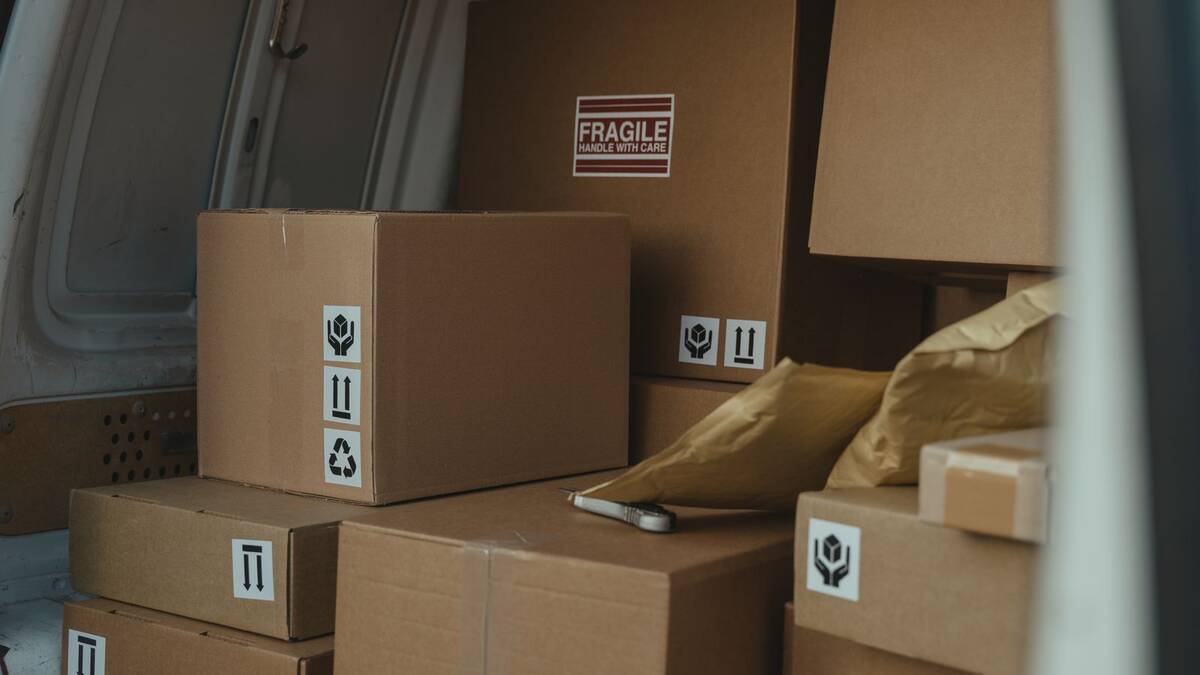
Foreign buyers order 2 tons of chocolate. For one container, the load is too little. For an aircraft, it's too much and the freight cost is heavy. At this point, the exporter chooses between FCL and LCL.
FCL (full container load) means one container is used by one shipper. LCL (less than container load) means the container is shared. Your goods are combined with other shippers' cargo, sealed together at the origin country, and then separated again at the destination country.
How LCL is calculated: W/M, take the larger number
LCL rates are expressed per W/M (weight or measurement). The forwarder compares two numbers: weight in metric tons and volume in cubic meters (CBM). The charge is based on the larger number. According to DHL, volume usually wins.
| Shipment | Weight | Volume | Billing basis |
|---|---|---|---|
| Chocolate bars in cartons | 2 tons | 4 CBM | 4 W/M (volume) |
| Metal spare parts | 2 tons | 1.5 CBM | 2 W/M (weight) |
| Example from DHL | 1 ton | 10 CBM | 10 W/M (volume) |
In the last row, the charge is ten times the rate per W/M, not once, even though the weight is only one ton. The practical consequence: oversized cartons make you pay for empty space. Measure the cartons and pallet arrangement again before requesting a quote.
Local costs at the origin and destination ports are also calculated from the same W/M. In FCL, container handling fees are included in the rate. In LCL, you only pay a portion because the container is shared. Additional fees may apply for non-stackable goods and hazardous materials.
When LCL tends to be cheaper
DHL states that LCL is usually, but not always, cheaper than FCL. The chances are high if these three conditions are met:
- Shipment volume is below 20 CBM.
- The route is a common trade lane that has direct LCL services.
- The goods are general cargo or hazardous materials loaded according to IMO regulations.
For comparison, Hapag-Lloyd lists a standard 40-foot container with a capacity of 67.7 CBM and a maximum load of 28,750 kg. The standard 20-foot container has a maximum load of 28,130 kg. These figures are examples and may vary between manufacturers. Thus, a 20 CBM shipment only fills less than a third of a 40-foot container.
Above 20 CBM, request two quotes simultaneously, LCL and FCL, and then compare. There is also an upper limit for LCL: Maersk, for example, lists a limit of 3,000 kg and 29 CBM per piece, and 20,000 kg and 60 CBM per order. Cargo exceeding the size limits incurs additional handling fees at the consolidation warehouse.
What is paid differently: time and loading/unloading points
LCL is much cheaper than air cargo on almost all routes, but the transit time is usually much longer. The process also has two additional stages: consolidation at the origin country and deconsolidation at the destination country. This means there are two loading/unloading operations at the warehouse, aside from loading onto the ship.
FOB or FCA for containerized goods
Many export contracts still use FOB due to tradition. The ICC Academy notes that FOB is only for sea or inland water transport from port to port. The risk transfers to the buyer once the goods are on board the ship. This rule originated in the early 1800s when containers did not exist.
FCA can be used for any mode of transport. The risk transfers when the goods are handed over to the carrier designated by the buyer, either at the seller's warehouse or at another agreed location, such as a container terminal. The ICC Academy describes FCA as a rule suitable for goods in containers or pallets.
For LCL, the difference is noticeable. Goods are usually delivered to the consolidation warehouse first, then loaded onto the ship a few days later. With FOB, the risk only transfers once the goods are on board the ship, so while the goods are waiting at the warehouse, the risk remains with you. Under both FCA and FOB, the seller still handles export formalities.
Checklist before requesting a quote
- Calculate volume: length x width x height per carton, multiplied by the number of cartons, plus pallets.
- Compare tons and CBM. The larger number is the billing basis.
- Ensure whether the goods can be stacked or not.
- Above 20 CBM, also request an FCL quote.
- Write the Incoterms and delivery point in the contract, including the version, for example, FCA seller's warehouse, Incoterms 2020.
A complete overview of the export process is available in the article a comprehensive guide to export from upstream to downstream. If you prefer watching a basic explanation, there is a short clip about the difference between FCL and LCL.
Sources
- DHL Global Forwarding, "The Cost Drivers of LCL Rates". https://www.dhl.com/us-en/home/global-forwarding/freight-forwarding-education-center/the-cost-drivers-of-lcl-rates.html
- Maersk, "Less-than-Container Load (LCL) Shipping". https://www.maersk.com/transportation-services/lcl
- Maersk, FAQ "What is the maximum CBM for LCL?". https://www.maersk.com/support/faqs/what-is-the-maximum-cbm-for-lcl
- ICC Academy, "FCA & FOB Incoterms 2020 explained: Key differences" (November 19, 2024). https://academy.iccwbo.org/incoterms-2020-fca-or-fob
- Hapag-Lloyd, specifications for 20' Standard and 40' Standard containers. https://www.hapag-lloyd.com/en/services-information/cargo-fleet/container/40-standard.html