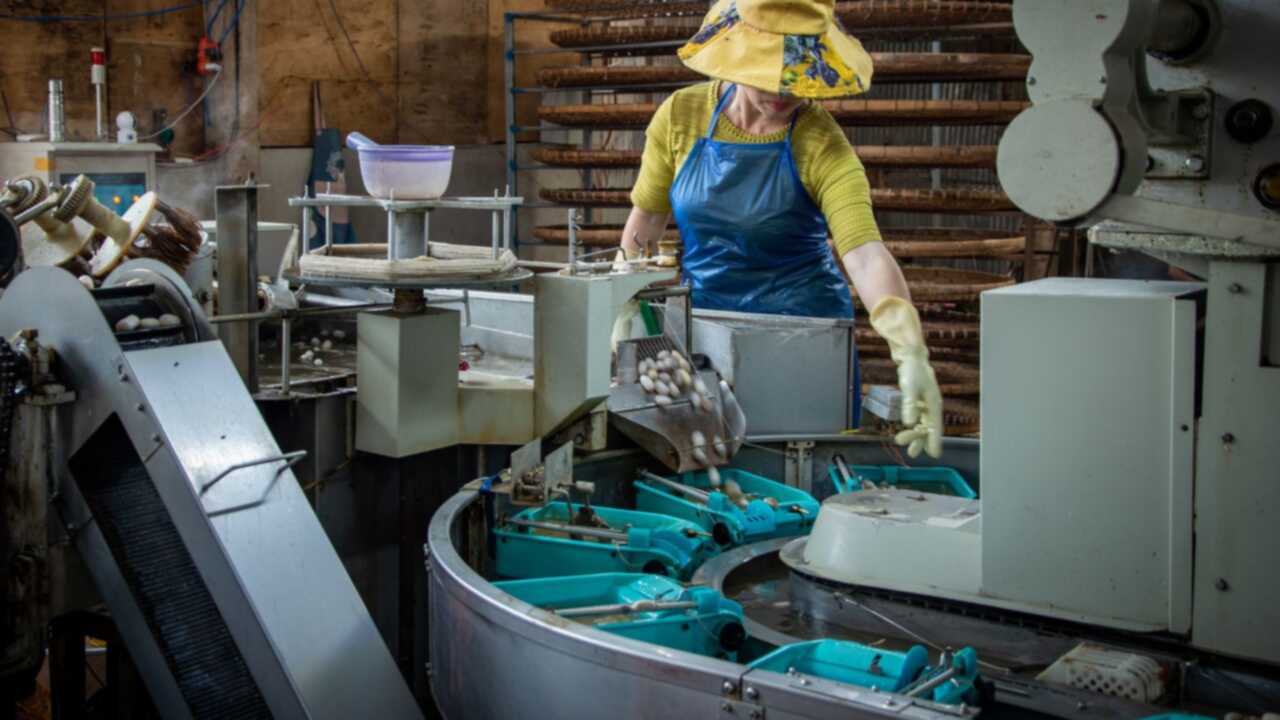
The defect analysis meeting is over. The fishbone diagram on the board is full, and the thickest bones are in Manpower: operators are careless, operators are rushed, operators are untrained. The action is easy to guess, which is retraining. Three months later, the same defect returns.
Usually, the issue is not with the diagram. The fishbone diagram, also known as the Ishikawa diagram or cause-and-effect diagram, is indeed designed to capture potential causes. What often gets overlooked are the two steps that follow: testing which candidates are truly the root causes, and then selecting actions that are strong enough.
Fish head: write the problem, not assumptions or solutions
The root cause analysis guidelines from CMS, the U.S. government health service agency, provide two prohibitions for the statement at the fish head. Do not write the problem as a need for something. Do not insert why or how. Just state what is wrong, as clearly as possible.
| Written this way | Why it's weak |
|---|---|
| We need more inspectors | This is a solution, not a problem |
| Operators are careless | This is an assumption of the cause |
| Quality of line 2 is poor | Too vague to measure |
| Scratches on [part name] in [line] increased from [number] to [number] per [period] since [date] | Better: what, where, how many, since when |
Six bones and their guiding questions
ASQ, the American Society for Quality, notes that Ishikawa introduced the six Ms as general labels, while encouraging teams to name categories that are easy to understand.
| Bone | Contents according to ASQ | Guiding questions |
|---|---|---|
| Material | materials, components, supplies | Has the lot or supplier changed? |
| Machine | production equipment, transport equipment, software | When was this equipment last maintained or calibrated? |
| Method | procedures, techniques, processes, rules | Is the way of working on the floor the same as what is written? |
| Measurement | indicators, measuring tools, data collection points | Are the measuring tools calibrated and read in the same way? |
| Manpower | people, training, skills | What makes people choose that method during the incident? |
| Mother Nature | environment and external factors | Have temperature, dust, or layout changed? |
The categories do not have to be six. The Clinical Excellence Commission, a government body in New South Wales, Australia, exemplifies communication, policies and procedures, monitoring, education, environment, and documentation. ASQ suggests revisiting the least populated bones when ideas start to run out, but CMS examples note that teams do not always find problems in every category. Bones that remain empty after review are normal; do not fill them just to appear complete.
Why the Manpower bone rarely becomes the root
CMS guidelines ask root cause analysis to focus on systems, not individual performance. Assessing the correctness of an individual is the supervisor's responsibility, through a separate channel.
An example fishbone in the CMS guidelines illustrates the reason. A nursing home resident fell while being transferred to the toilet by a single caregiver without a lifting device. At first glance, this seems like negligence. Upon further investigation, the lifting device's battery was charging and there was no backup. New instructions on how to transfer residents had also not reached the care card held by the caregiver. The root cause written by the team: there is no process ensuring the lifting device's battery is always ready, and there is no process to communicate new care instructions in a timely manner.
So if a branch stops at "careless operator," ask why again. The next answer usually shifts to Method, Machine, or layout. If it’s easier to see how to break down the Manpower bone into smaller branches, there is a clip from the QA/QC Operation class.
Two questions to test a root
CMS provides two questions for each potential root:
- Does the problem still occur if this cause is absent?
- Will the problem recur if this cause is fixed?
If both are answered "no," you have reached the root. If either is "yes," continue asking why.
Voting, for example, where each member marks the three strongest candidates, helps choose which to test first. The most votes are not proof. A complex example on the ASQ page concludes with the team's decision to gather additional data through a check sheet. Once the data is collected, the Pareto diagram helps visualize which causes occur most frequently.
Measure the strength of actions
CMS categorizes corrective actions based on their strength:
| Strength | Example |
|---|---|
| Strong | change the physical environment, engineering controls that enforce correct steps, simplify processes, standardize tools or processes |
| Medium | add personnel or reduce workload, checklists, reduce distractions |
| Weak | double-checking, warning labels, new procedures or memos, training, additional studies |
Retraining is at the bottom of the list. It is still better than doing nothing. But if that is the only action that arises from a fishbone, it is highly likely that the analysis has stopped too soon.
After actions are implemented, CMS recommends three measures: whether the actions are being performed correctly, whether people are adhering to them, and whether the problem has stopped.
Sources
- American Society for Quality (ASQ), What is a Fishbone Diagram? Ishikawa Cause & Effect Diagram, reviewed October 2024: https://asq.org/quality-resources/fishbone
- Centers for Medicare & Medicaid Services (CMS), How to Use the Fishbone Tool for Root Cause Analysis: https://www.cms.gov/medicare/provider-enrollment-and-certification/qapi/downloads/fishbonerevised.pdf
- Centers for Medicare & Medicaid Services (CMS), Guidance for Performing Root Cause Analysis (RCA) with Performance Improvement Projects (PIPs): https://www.cms.gov/medicare/provider-enrollment-and-certification/qapi/downloads/guidanceforrca.pdf
- Clinical Excellence Commission, NSW Health, Cause-and-effect diagram, May 2026: https://cec.health.nsw.gov.au/improving-practice-and-culture/improvement-tools/cause-and-effect