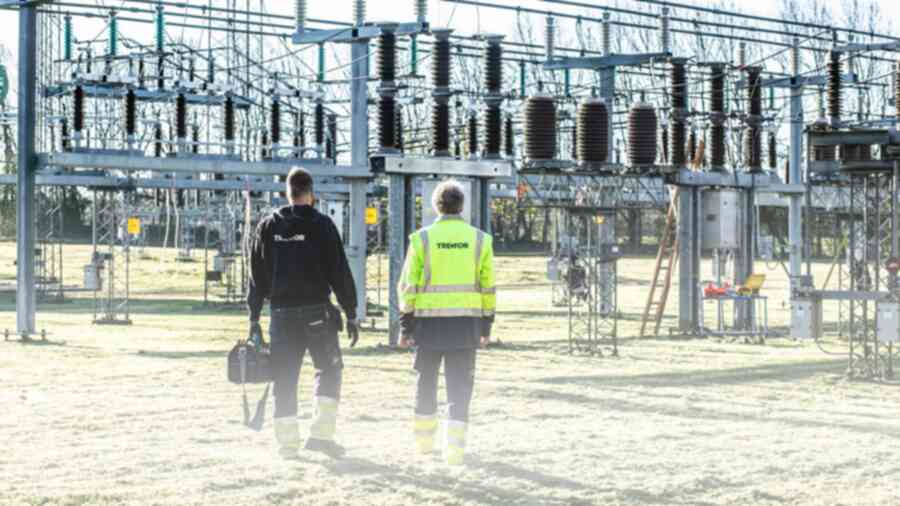
Transformers rarely fail suddenly. Before they completely break down, they usually give signals: a slight increase in temperature, gas beginning to form in the oil, insulation gradually aging. The problem is, these signals are not visible to the naked eye.
This is where predictive maintenance differs from simply waiting for a failure. Instead of dismantling when it's too late, technicians read the condition of the equipment while it is still operating. Three tests are relied upon to hear the whispers of the transformer before they turn into screams: DGA, thermography, and tan delta.
DGA, Reading the Breath of Transformer Oil
Dissolved Gas Analysis analyzes the gases dissolved in the insulating oil. Each type of disturbance leaves a characteristic gas signature. Hydrogen and acetylene, for example, often indicate the presence of electrical discharges or arcing, while methane and ethane are more indicative of overheating. Standards such as IEEE C57.104 and IEC 60599 provide a framework for interpreting these gas patterns. With routine DGA, internal disturbances can be detected long before they develop into total failure.
Thermography, Seeing Invisible Heat
Infrared cameras convert heat into images. Loose connection points, overloaded busbars, or problematic switchgear contacts will appear as striking hotspots. The advantage is that inspections can be conducted without shutting down the system, thus production is not disrupted. For factories where downtime is costly every hour, this capability is invaluable.
Tan Delta and Insulation Health
Tan delta, or dissipation factor testing, measures how well the insulation is still performing its job. As it ages, insulation absorbs moisture and becomes contaminated, and an increasing tan delta value becomes an indicator of declining quality. Combined with insulation resistance testing, the results provide a picture of whether the transformer is still safe to operate or nearing its limits.
From Reactive to Predictive
Indonesia assesses the reliability of electricity supply through indicators such as SAIDI and SAIFI, which measure the duration and frequency of outages. Any undetected transformer disturbances contribute to those figures, and ultimately to the trust of industrial customers. Shifting from a reactive repair model to condition-based maintenance is no longer a luxury option, but a way to keep systems alive and costs under control.
References:
- IEEE – C57.104 Guide for the Interpretation of Gases Generated in Mineral Oil-Immersed Transformers
- International Electrotechnical Commission – IEC 60599 Mineral Oil-Filled Electrical Equipment in Service
- PT PLN (Persero) – Indikator Keandalan Sistem SAIDI dan SAIFI