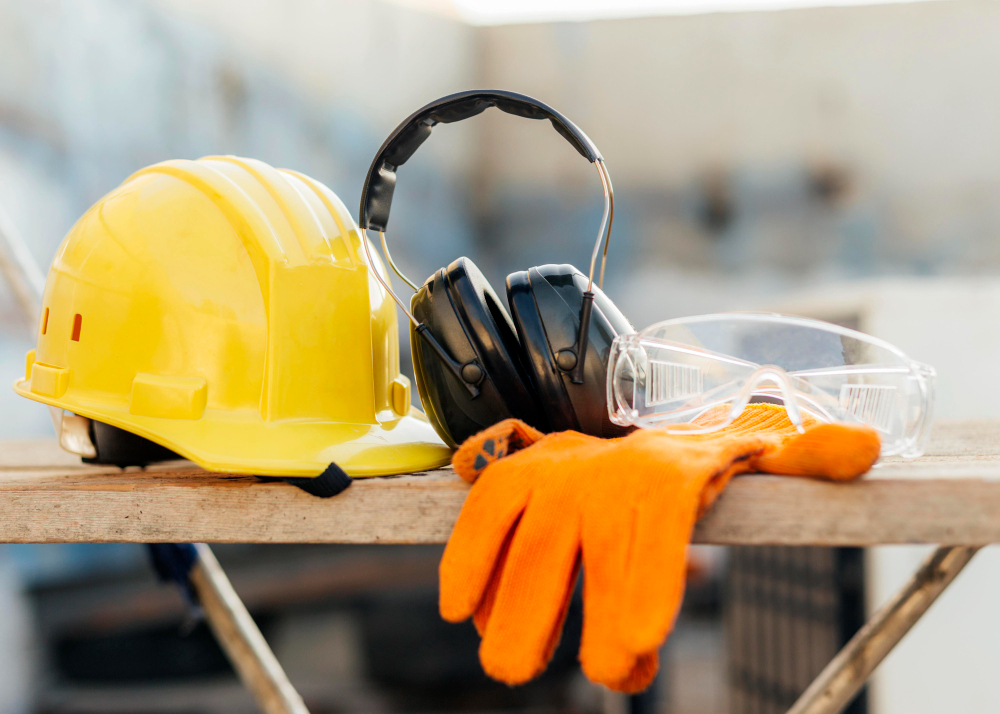
In a corporate organization, one of the mandatory and important aspects that must be the focus in running and protecting the company is related to the welfare and safety of workers or employees. To achieve such an environment, one effective way is to implement a Safety Management System (SMS).
What is meant by Safety Management System (SMS)?
Safety Management System (SMS) is a framework within an organization to be implemented in order to achieve one of the missions of an organization or company, which is to reduce and control safety risks in the work environment. According to SHEilds, the presence of SMS in the work environment can foster positive values, as follows:
- Systematic. SMS has a systematic approach, similar to ISO 9001 Quality Management System or ISO 14001 Environmental Management System, which can help organizations identify, assess, and effectively control hazards in the workplace.
- Improving Compliance with Regulations. A well-implemented SMS can assist companies in complying with applicable laws, particularly in Indonesia, and is related to SMS, such as regulations concerning health and safety in the industrial environment. This can reduce the risk of fines, penalties, and legal actions.
- Enhancing Risk Management and Operational Efficiency. Certainly, the existence of SMS is very useful for identifying and assessing potential hazards, implementing appropriate control measures, and monitoring the effectiveness of SMS. This also significantly impacts operational efficiency due to risk management.
- Increasing Employee Involvement in the Company. By involving workers in developing and implementing SMS, it can provide a friendly environment and a strong safety culture. Not only that, but it also improves the relationship between workers and the company regarding one mission, which is workplace safety.
- Reducing Costs. The existence of SMS can help companies in expenditures related to workers, such as medical costs, decreased worker productivity, and increased insurance premiums.
So far, the framework is still general. For readers in Indonesia, there is one thing that needs to be emphasized: this system has its own name and legal form here, namely the Occupational Safety and Health Management System or SMK3, which is regulated by Government Regulation Number 50 of 2012 and has been in effect since April 12, 2012.
What is often overlooked is that SMK3 is not a recommendation for all companies. Article 5 establishes two thresholds, and meeting just one of them is sufficient: employing at least 100 workers or having a high potential hazard level. The word "or" is what determines this. Small companies in high-risk sectors are still required to comply even if they have only a dozen employees, and an office with 120 people is also required even if the work is administrative.
Its implementation is also assessed, not just documented. The assessment procedures are regulated by the Minister of Manpower Regulation Number 26 of 2014, which simultaneously revokes three old regulations that are still often cited in the field: Minister of Manpower Regulation PER.05/MEN/1996, Minister of Manpower Regulation PER.18/MEN/XI/2008, and Minister of Manpower Decree KEP.19/MEN/1997. If your internal documents still refer to these three, those references are no longer valid.
Finally, it is important to distinguish it from the ISO standards mentioned above. The international equivalent for occupational safety is not ISO 9001 or ISO 14001, but ISO 45001, which was published on March 12, 2018, and replaces OHSAS 18001. The difference is fundamental and often misunderstood: SMK3 is a legal obligation whose assessment is regulated by the state, while ISO 45001 certification is voluntary and issued by certification bodies. Having one does not automatically fulfill the other.