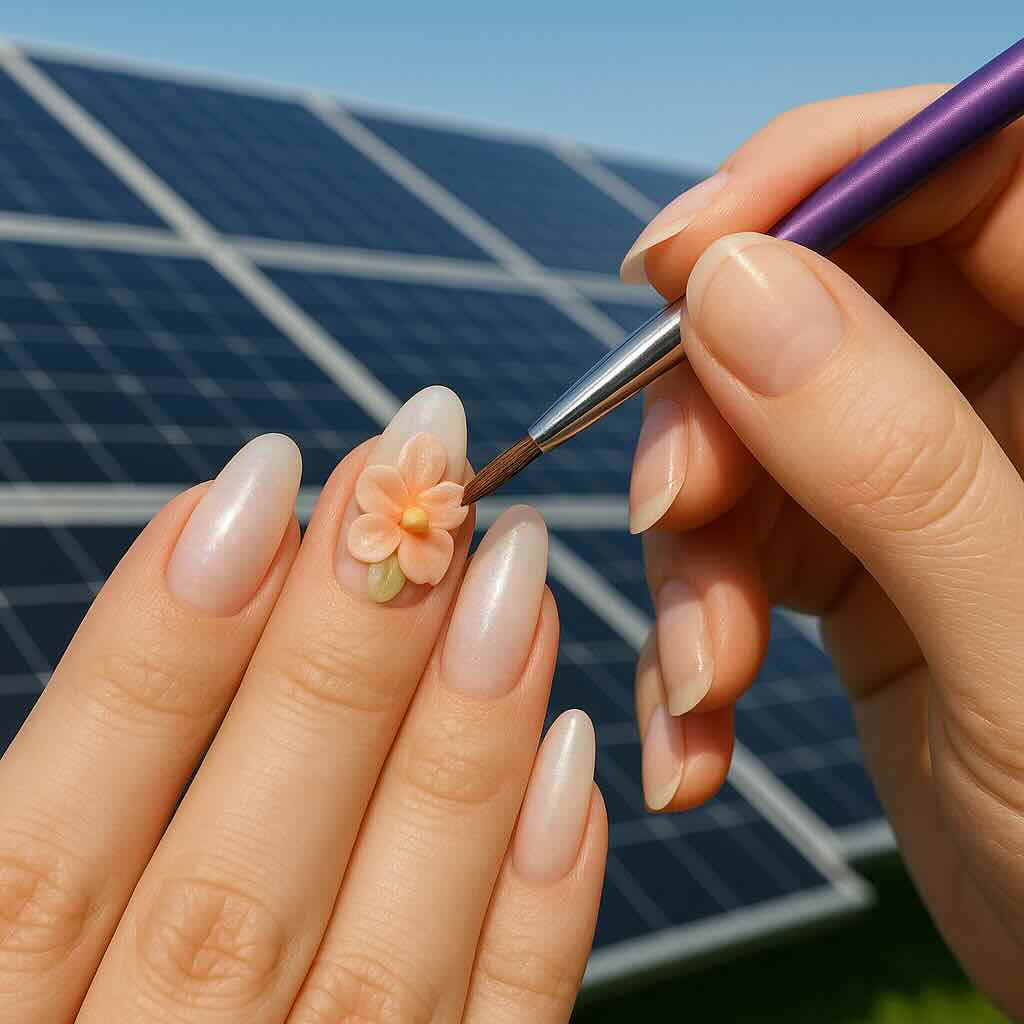
Nail art is not just an adornment at the tips of your fingers. For many, it serves as a small space to experiment, celebrate moments, and even express character that can sometimes be difficult to convey in words.
Trends like 3D floral, nuance finish, and Y2K colors are not just about style. They reflect a desire to stand out, be bold, and remain playful. However, to create precise and aesthetic details, specific techniques are required, ranging from layering, media selection, to understanding color and shape.
Unfortunately, many who want to try are intimidated beforehand: “Afraid it will look bad,” “Never held a brush before,” “Don’t understand the media.” In fact, with media like press-on nails, anyone can learn and practice without pressure. Designs can be tried, repeated, and even collected, without having to be permanent.
A nail art class like this provides space for that exploration. Learn techniques, get acquainted with tools and materials, while chatting with friends who also appreciate aesthetics. And who knows, from casually learning, a new passion may emerge that could lead to creations or even a career.
One aspect not yet mentioned above is the materials. Nail polish, gel, press-on glue, and removers are classified as cosmetics under Indonesian regulations, and cosmetics distributed here must be notified to BPOM (National Agency of Drug and Food Control) first. You can check it yourself on CekBPOM for the list of cosmetic products, complete with their licensing status, whether it is still valid or has been revoked. The habit recommended by BPOM is simply summarized as CekKLIK: check the Packaging, read the Label, ensure the Distribution License is present, and check the Expiration date.
This notification is not just a stamp on the packaging. On August 7, 2025, BPOM announced the revocation of distribution licenses for 21 cosmetic products because the products manufactured did not match those registered, whether due to different types of ingredients, different concentrations, or both, and most of the findings were on products made through contract manufacturing. The risk mentioned by BPOM itself is allergic reactions in users who are sensitive to ingredients not listed on the label. For products that adhere for hours on nails and surrounding skin, that is a sufficient reason to keep the packaging, rather than throwing it away immediately.
One more thing if your practice moves from press-on to gel that needs to be cured under a lamp. On January 17, 2023, Nature Communications published a study on UVA exposure from nail polish dryers. In the tested cells, which included mouse embryonic fibroblasts, human skin fibroblasts, and human epidermal keratinocytes, the exposure increased levels of reactive oxygen species and left mutation patterns that increased with dosage. It should be stated plainly: the experiment was conducted on cells in a laboratory, not long-term observations of salon users, so this research has not yet established how significant the risk is to humans. What is clear is that the exposure is not neutral, so limiting unnecessary exposure duration makes sense.
None of this makes nail art intimidating. What changes is the approach to it, from mere play to a craft that has material standards. Choose media consciously, keep the packaging, note which products cause your skin to react, and do not let your hands linger under the lamp without reason. Technical skills still grow from practice hours, and those hours are more enjoyable to accumulate if your skin does not become a victim of experimentation.
Sources
- BPOM, press release August 7, 2025 – BPOM Revokes 21 Distribution Licenses for Cosmetics with Composition Not in Accordance with Registration, including the regulatory basis and CekKLIK recommendations
- BPOM – CekBPOM, list of cosmetic products, where to check the notification number and distribution license status of a product
- Nature Communications, January 17, 2023 – DNA damage and somatic mutations in mammalian cells after irradiation with a nail polish dryer, study on mammalian cells, not an epidemiological study on humans