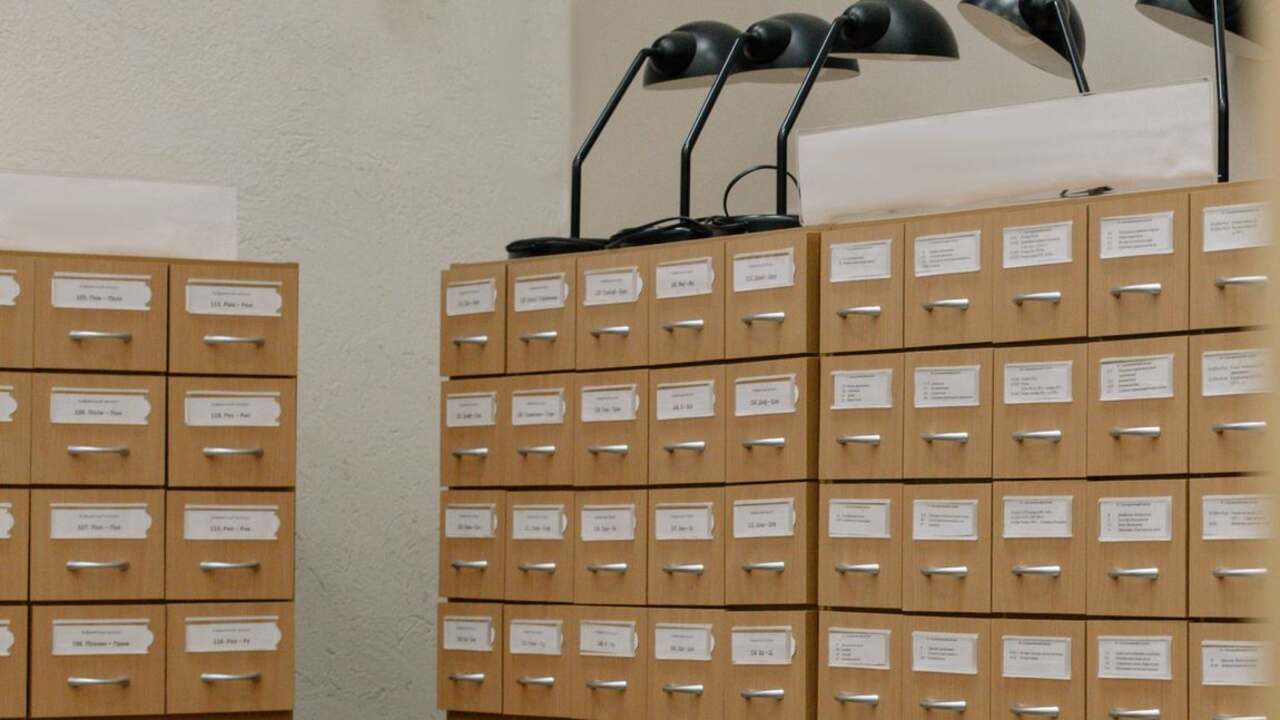
The search results in academic search engines appear as a filtered list. The official documentation itself never promises that, and its content actually explains the opposite.
Two content criteria, zero quality criteria
Google Scholar's inclusion guidelines only contain two content criteria: the document must be a scientific article, and its complete abstract must be freely readable without logging in, installing software, or closing embedded ads first. There are no criteria regarding peer review, publisher reputation, or quality of methods.
The list of accepted document types reinforces this. In addition to journal articles, conference papers, and technical reports, the guidelines explicitly mention drafts, dissertations, preprints, postprints, and abstracts. Drafts and preprints have indeed not undergone peer review. This is an intentional scope, not a system leak.
The rest is technical: HTML or PDF files with searchable text, a maximum size of 5 MB, one article per URL, and the page must be accessible from the homepage via no more than ten simple HTML links. The minimum metadata consists of just three items: title, full name of the first author, and year of publication. There is one more figure that is rarely noticed: updates to indexed articles generally only appear after 6 to 9 months, so the information you read today may be an outdated snapshot.
Filtering through a thousand results one by one is clearly unreasonable. What makes sense is to start from a list that has already been filtered by other institutions.
A list that actually filters, along with the numbers
For Indonesian journals, refer to SINTA. As of September 6, 2026, the SINTA journal page contains 16,774 journals from 2,019 publishers, each labeled with accreditation ranking and Scopus and Garuda indexing markers if applicable. The rankings range from 1 to 6, and accreditation results are indeed issued separately for ranks 1 and 2, with ranks 3 to 6. Look for the journal name there before citing, and do not stop at the badge displayed on the journal's own site.
For international open access journals, refer to DOAJ. The basic criteria are numerical and can be checked one by one: at least 5 research articles per year, new journals must have a publication history of more than one year or at least 10 open access articles, each article must be evaluated by at least 2 independent reviewers, and the proportion of articles with one author being an editor or editorial board member must not exceed 25 percent in the last two issues. Acceptance decisions are generally made within 6 months, and journals that cease to meet the criteria are removed.
Accreditation is not a permanent status
This part is often overlooked. In the announcement of the accreditation results for scientific journals for Period 2 of 2025, LLDikti Wilayah II emphasizes that the managers of accredited journals must maintain the quality of articles and governance, and if there is a decline in quality, the accreditation ranking may be downgraded or revoked. Re-accreditation can only be applied for after the journal publishes 4 new issues since the last evaluated issue.
The consequence is that the ranking badge on a journal's header does not answer the right question. What you need to know is the journal's ranking at the time the article was published, as well as its status today.
The rules changed in August 2026
On August 11, 2026, ARJUNA announced the Decision of the Director General of Science and Technology Number 374/DST/D.D1/HM.01.01/2026 regarding the Technical Guidelines for Scientific Journal Accreditation, as an implementation of the Minister of Higher Education, Science, and Technology Regulation Number 9 of 2026 concerning Scientific Journal Accreditation. This decision revokes and declares invalid the Decision of the Director General of Higher Education, Research, and Technology Number 134/E/KPT/2021 which has been used as the accreditation guideline.
The practical impact is significant. Guidelines, training materials, and writings that still refer to the 134/E/KPT/2021 guidelines as the current rules are now outdated. Check the regulation number referenced before using its assessment instruments.
Six steps before citing
- Copy the journal name, search on the SINTA journal page, and note the ranking and the date you checked it.
- For foreign journals, check DOAJ. If it is not there, find out why.
- Open the review process page on the journal's site. If the process is not explained, stop there.
- Check the editorial board: there must be names along with affiliations, not just names.
- Check the author fees. All fees must be written, including manuscript withdrawal fees.
- Match the accreditation ranking with the article's publication date, not with today.
Such source checks complement manuscript checks, not replace them. A low similarity score, for example, is not proof that a manuscript is free from plagiarism.
This topic is also discussed in the class on Utilizing Artificial Intelligence (AI) for Scientific Journal Articles with Rony Sandra Yofa Zebua. If you prefer to see the explanation directly, there is a clip available at Why You Shouldn't Rely on Google Scholar for Scientific Research.
Sources
- Inclusion Guidelines for Webmasters, Google Scholar
- SINTA Journal Page, Ministry of Higher Education, Science, and Technology
- Decision of the Director General of Science and Technology Number 374/DST/D.D1/HM.01.01/2026 regarding Technical Guidelines for Scientific Journal Accreditation, ARJUNA
- Announcement of New Accreditation Results for Scientific Journals for Period 2 of 2025 Ranks 1 and 2, LLDikti Wilayah II
- Guide to Applying version 2.9, Directory of Open Access Journals