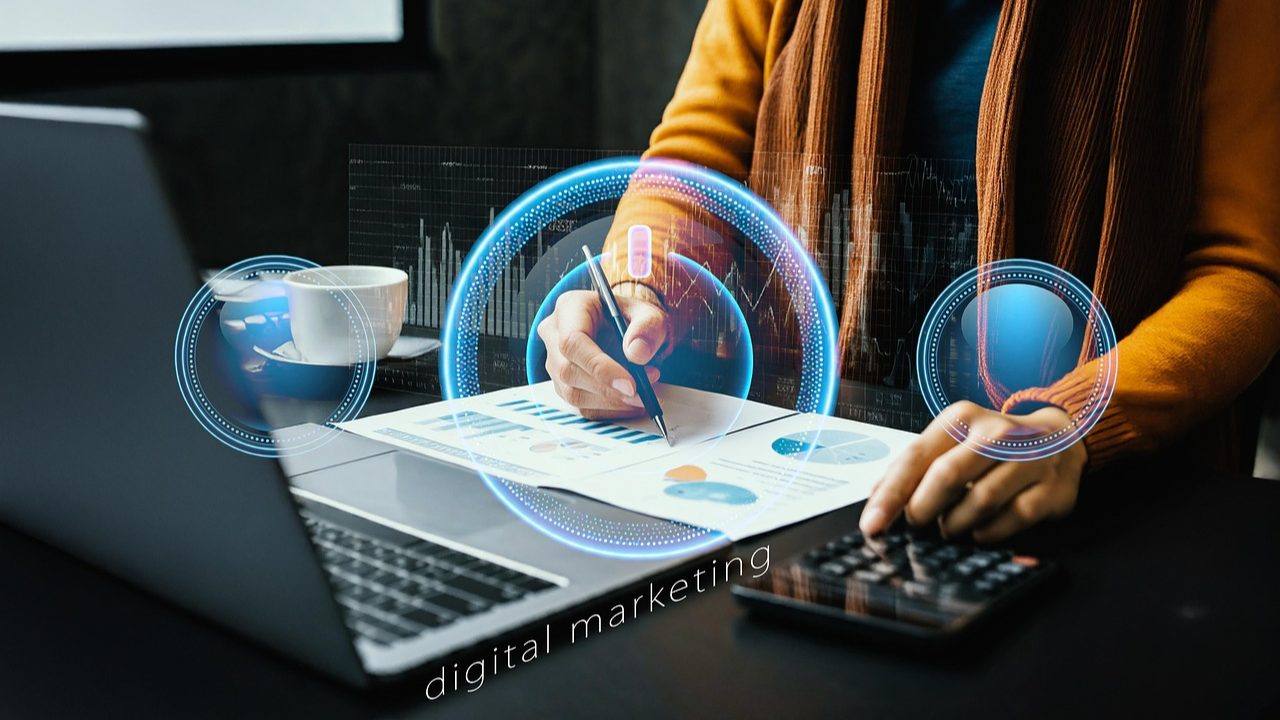
Imagine a marketing team with just one person but capable of producing content like a team of ten. This is not science fiction; it is happening in companies that have integrated AI into their marketing workflows. They create landing pages in hours, not days. They generate twenty versions of ads simultaneously for testing. They write personalized email copy for thousands of different customer segments without adding a single person to the team.
Meanwhile, competitors still relying on traditional methods take weeks for the same processes. This gap is not just about speed; it’s about the ability to experiment, learn from data, and make more accurate decisions. This is where AI Powered Marketing fundamentally changes the competitive landscape.
What Has Really Changed?
Marketing is not a new concept. Its definitions, objectives, and elements have been studied for years in business schools. What has changed is how all of this is executed. The marketing funnel, once linear and predictable, has now become complex, non-linear, and operates across dozens of touchpoints simultaneously, from social media, search, email, to push notifications in apps.
Consumers move faster, expectations for personalization are higher, and the purchasing decision cycle is shorter. Someone can discover a product on Instagram, read reviews on Google, ask for recommendations on WhatsApp, and make a purchase on a marketplace all within 20 minutes. Marketing teams that have not adopted tools capable of moving this quickly will always lag in responding to those moments.
This is where AI comes in—not to replace marketers, but to exponentially expand their capacity. AI doesn’t sleep, doesn’t need two hours of brainstorming, and doesn’t slow down workflows due to lengthy coordination meetings.
What Can AI Do in Marketing Now?
This is not a theoretical question. Several categories of AI use in marketing have already become industry standards:
Content creation. Tools like ChatGPT, Claude, or other AI-based platforms can help create drafts of articles, social media captions, email campaigns, or video scripts in minutes. This doesn’t mean the results are perfect right away, but the process from blank page to editable draft becomes much faster. This shifts the marketer's task from “writing from scratch” to “editing and refining.”
Ad visual creation. With generative AI tools for images, marketing teams can create ad visuals in various sizes for different platforms, with colors and styles tailored for different audience segments without having to rely entirely on graphic designers for every small iteration.
Market research and competitor analysis. AI can help synthesize information from various sources, identify relevant trends, and map competitor positioning faster than manual searches that can take days.
Large-scale personalization. Emails with the recipient's name are the most basic level of personalization. AI enables much deeper personalization: different recommendation content based on browsing behavior, offers tailored to the purchasing stage, and optimized timing for message delivery based on individual activity patterns.
Landing pages and websites. Creating fully functional landing pages can now be done in minutes using AI, from structure, copy, to basic design. This does not replace web developers for complex projects, but for quick campaign needs or MVPs, the speed of execution opens up previously impossible opportunities.
Case Study: Startup in 15 Minutes
One of the most practical sessions in Taalenta's AI Powered Marketing class is creating a “startup in 15 minutes,” a real demonstration of how far AI can help accelerate the execution of business ideas. Participants start from scratch: using AI to create business descriptions, then immediately moving to create Instagram posts for promotion, designing ad materials, building landing pages, and even creating company profile video scripts.
The main point is not that all of this can be done perfectly in 15 minutes. But that the barrier to starting, which used to involve weeks of content preparation, can be drastically cut using AI as an accelerator. For small business owners, freelancers, or professionals looking to build a personal brand, this is a very real and immediately felt change.
Is AI Taking Marketers' Jobs?
This question arises in almost every discussion about AI in the workplace, and the answer requires nuance. The types of jobs most at risk are those that are repetitive and template-based, such as creating social media posts repeatedly with the same format, writing standard promotional emails, or adjusting visual sizes for various platforms. These jobs can be replaced or significantly reduced by AI.
Conversely, jobs that require a deep understanding of brand context, empathy for the audience, strategic creativity, and relationship-building skills are becoming more valuable. Marketers who can leverage AI to produce more quality output will be far more productive than those who cannot.
The trend is not “AI vs humans” but “AI-savvy marketers vs those who are not.” The productivity and economic value gap between these two groups will continue to widen as AI becomes increasingly integrated into professional marketing workflows.
Ethics and Risks Not to Be Ignored
The adoption of AI in marketing is not without complications. There are ethical dimensions that every practitioner needs to understand: AI-generated content without human verification can spread misinformation. The use of AI for personalization can shift into manipulative territory if there are no clear ethical boundaries. The impact of AI on the creative industry, from illustrators, photographers, to copywriters, is an ongoing conversation with no resolution yet.
Understanding these risks does not mean avoiding AI, but using it responsibly. Marketers who are aware of these ethical dimensions will make better decisions about when and how to use AI, and that is a competitive advantage in an era where many companies are still operating without a clear framework.
Learning from Practitioners: Johan Cahyadi
The AI Powered Marketing class at Taalenta is led by Johan Cahyadi, a Web3 AI Digital Marketer with experience in venture capital and a focus on optimizing digitalization through the integration of art, marketing, and technology. His venture capital background provides a different perspective from most marketing trainers, with an understanding of how technology is evaluated from a business standpoint, not just as a tactical tool.
In an era where execution speed is a competitive advantage, a deep understanding of the audience remains an irreplaceable foundation. AI can accelerate content and ad production, but targeted strategies still come from humans who understand the market context well.
References:
- McKinsey – The State of AI in Marketing and Sales → mckinsey.com
- Salesforce – State of Marketing Report → salesforce.com
- HubSpot – AI in Marketing: How Marketers Use Artificial Intelligence → hubspot.com