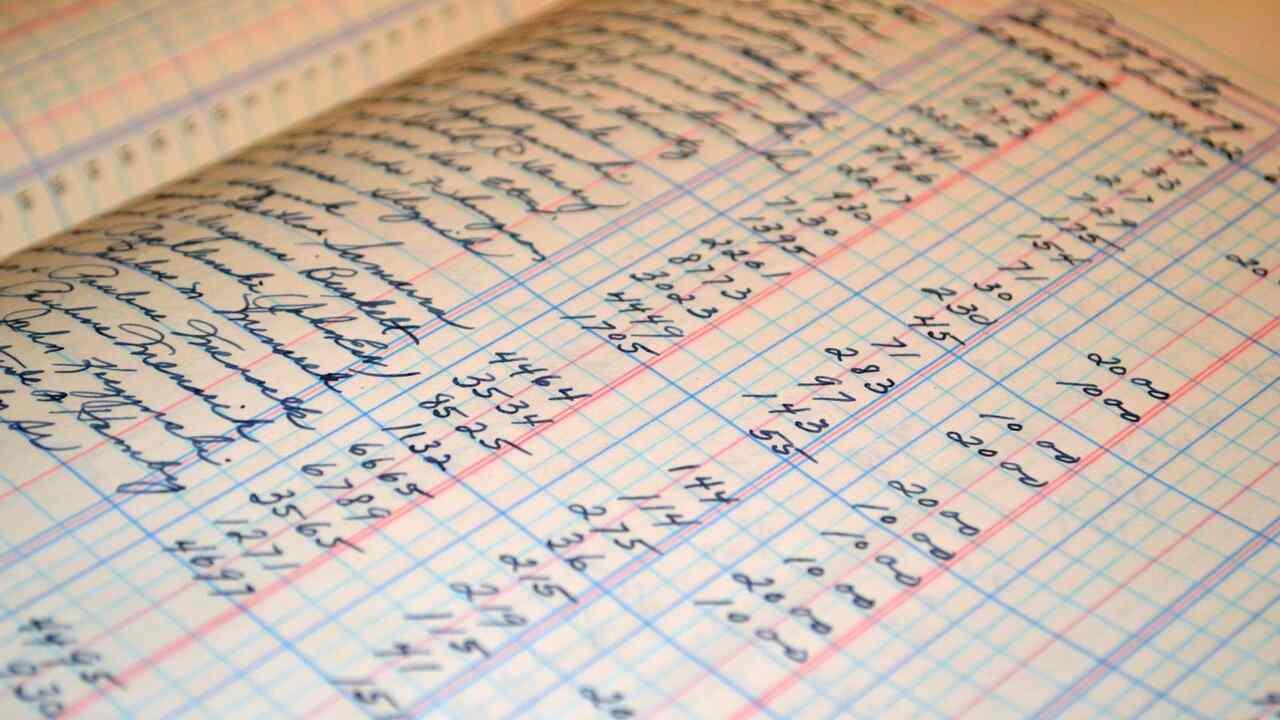
Almost every office has a file containing hierarchical numbers that everyone calls a spreadsheet, and hardly anyone stops for a moment to ensure its meaning. In fact, its definition determines how trustworthy the file can be.
A spreadsheet is a self-recalculating grid of cells
A spreadsheet is a grid of cells arranged in rows and columns. Each cell has an address made up of a combination of column letters and row numbers, such as A1 or B7. Up to this point, it is just a table.
What makes it different lies in the content of the cells. Cells can contain formulas that reference other cells, and as soon as the referenced value changes, the result is recalculated without you asking. The ability to automatically recalculate is the core of the concept, as well as what distinguishes a spreadsheet from a table in a word processor. Formulas are also usually the source of the first errors, such as in the sequence of conditions in the IF formula.
Two terms are often confused. In Excel, a file is called a workbook, while the tabbed sheet within it is called a worksheet. The limits you will encounter apply per worksheet, not per file.
The limits are definite numbers, not feelings
The official Microsoft specification page states that one Excel worksheet contains 1,048,576 rows by 16,384 columns. A single cell can hold a maximum of 32,767 characters, and the dates that can be calculated range from January 1, 1900, to December 31, 9999.
Google Sheets has a different quota: 10 million cells or 18,278 columns for one spreadsheet, and that quota is divided across all tabs within it, not allocated per tab. So adding a tab does not increase space.
The old format with the .xls extension is much narrower, with only 65,536 rows.
Exceeding the limits rarely sounds like an error
In October 2020, Public Health England announced that 15,841 positive COVID-19 test results between September 25 and October 2 were not included in the daily report. The cause was a .xls formatted template with a limit of 65,536 rows. When the file was full, the next records were not read, no error message appeared, and contact tracing for thousands of people was delayed.
This pattern is worth remembering: spreadsheets are often silent rather than protesting. The Indonesian identity number follows the same pattern. The NIK consists of 16 digits, and starting July 1, 2024, tax administration services will use the NIK as NPWP or NPWP in a 16-digit format, while Excel's calculation precision stops at 15 digits. Details and remedies are discussed in the article about the 16th digit turning to zero.
Four things that spreadsheets never guarantee
- Schema is not enforced. One column can contain text, numbers, and dates simultaneously without anyone being reprimanded.
- Formulas and data occupy the same cell. Pasting a number into a formula cell deletes the formula, and the appearance remains normal.
- No history of who changed what, unless you enable it yourself.
- No guardian of relationships between tables. Deleting one reference row does not invalidate other rows that depend on it.
Databases provide all four as default behavior. That is the real difference, not about who can hold more rows.
When spreadsheets stop being sufficient
Four signs usually appear together: more than one person is typing into the same file at the same time, data needs to be validated upon entry rather than when checked, a change history starts to be needed for audits, and the number of rows increases every month without ever decreasing.
If all four occur, the solution is not to look for a larger spreadsheet. What changes is its role. Storage moves to a database, and the spreadsheet remains as a layer where people can view and calculate. The transition from Excel to SQL and Python follows that order, and activating AI-assisted calculation layers like Rows also does not eliminate the above limits.
Sources
- Microsoft Support, "Excel Specifications and Limits": https://support.microsoft.com/id-id/excel/excel-specifications-and-limits
- Google Drive Help, "Files you can store in Google Drive": https://support.google.com/drive/answer/37603
- The Register, October 5, 2020, "Excel spreadsheet blunder blamed after England under-reports 16,000 COVID-19 cases": https://www.theregister.com/2020/10/05/excel_england_coronavirus_contact_error/
- Directorate General of Taxes, Regulation of the Director General of Taxes Number PER-6/PJ/2024: https://pajak.go.id/en/node/108457
- Department of Population and Civil Registration of West Kalimantan Province, "Meaning of the 16 Digit Population Identification Number": https://dukcapil.kalbarprov.go.id/post/arti-16-digit-nomor-induk-kependudukan